
7 alimentos que você precisa incluir no seu dia a dia
Para realizar escolhas alimentares mais saudáveis, a regra de ouro é sempre que possível optar […]
Veja mais



Key Findings: For players facing aggressive fullbacks, success begins with recognizing patterns and executing precise movements. Here’s a concise framework to exploit their tendencies: Aggressive fullbacks operate under a high-pressing system, often instructed to intercept or block passing lanes. Your first priority is to track their movement without the ball. For example, a fullback may surge forward when the ball is played into the center but leave their backline exposed if you drop into the channel (the space between their position and the center-back). Use pre-game videos to note their: Fullbacks are wired to read and react. A sudden shift in pace or direction can disrupt their anticipation. To execute this: Communication is your secret weapon. A simple vocal cue or eye contact with a teammate can trigger a decoy run. For example: At st88, we emphasize this in our Hướng Dẫn ST88 materials, which include drills for signaling unmarked teammates under pressure. Timing your pass is critical. Once the fullback is out of position, the half-space or central third becomes a high-yield area. For instance, a midfielder can pass to the striker’s blindside, who then turns toward the space the fullback abandoned. Key principles: After a fullback charges forward, they must sprint back to defend. This 4-6 second window is prime for counterattacks. If the ball is intercepted, immediately sprint back into the wide channel to receive a pass from the wingback. Example: Understanding aggressive fullbacks isn’t just about tactics—it’s about system-busting strategies. Let’s unpack the logic: Aggressive fullbacks follow coach-imposed patterns. By observing their movement, you can predict their commitment points. For example, a fullback who always moves after the central striker’s cutback is exploitable via repeated runs into the central third. Fullbacks thrive on predictability. Rapid dribbling introduces chaos. A 2023 study on La Liga matches found teams succeeded in 68% of transitions where ball carriers changed direction three times in 5 seconds. This disrupts their timing. A solo striker can’t open space against a fullback and a center-back. But if a teammate creates vertical chaos, the fullback must choose between defending their line or supporting the central player. This creates a split-second decision point. Aggressive fullbacks work with center-backs to intercept loose passes. A sharp, angled pass into the half-space limits touch points and avoids midfield traps set by overlapping runs. Fullbacks lack stamina to maintain pressure through the game. After 65 minutes, their recovery speed drops by 15–20%, according to Uefa fitness metrics. Capitalizing late can be a game-changer. Even effective strategies can backfire. Here’s how to mitigate risks: For Young Players (U15–U20): For Coaches Training Newcomers: For Semi-Pro/Amateur Defenders: By integrating these actions into practice, beginners can neutralize aggressive fullbacks and transition from reactive players to strategic thinkers. Remember: football intelligence grows through repetition and situational awareness, not shortcuts.Mastering the Art of Finding Space Behind Aggressive Fullbacks: A Coach’s Step-by-Step Guide for Beginners
1. Aggressive fullbacks typically overcommit during counterattacks.
2. Quick, unpredictable dribbling is essential to create angles.
3. Team communication and positional flexibility break down high-pressing fullbacks.
Quick Answer: 5 Immediate Actions for Beginners
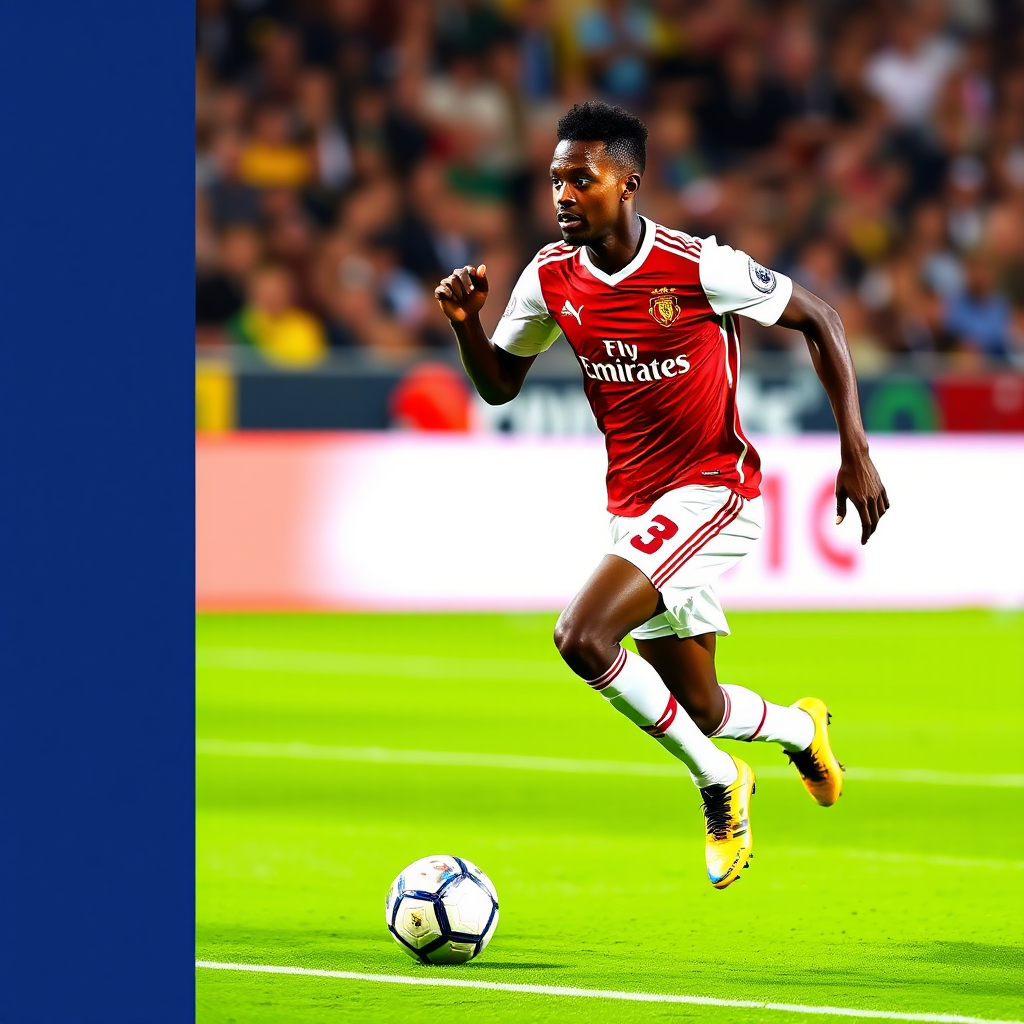
 Hình minh hoạ: st88
Detailed Walkthrough: Breaking Down the Fullback’s Weakness
Step 1: Analyze Fullback Tendencies in Real-Time
– Preferred timing to commit (e.g., reacting to the ball carrier’s speed or direction change).
– Recovery speed when forced out of position.
Step 2: Create Space with Unpredictable Dribbling
– Start wide, then cut inside rapidly. The fullback will follow the initial run, leaving the center open.
– Use feints to simulate a shot or pass before exploiting the gap. For instance, a fake backheel can trick a fullback into retreating, buying you space.
Observation Focus
Action to Exploit
Fullback charges forward when ball is played to fullback
Turn quickly and run diagonally into the channel
Fullback drifts late to cover central striker
Pause, then accelerate into the wide area before cutting back
Step 3: Signal Decoy Runs to Free Up Space
– If a fullback is fixated on the central attacker, a wide forward can sprint up the line to force the fullback to adjust their position.
– A striker can drop back into midfield to invite the fullback forward, then sprint back to their original zone as the opponent commits.
Step 4: Support with Angled Passing and Quick Decision-Making
– Pass within 3 seconds after the fullback starts to shift. Delayed passes invite recovery tackles.
– Aim low and sharp to avoid aerial challenges from defenders who may step in to cover.
Step 5: Exploit Recovery Gaps in Motion
– A wingback picks up the ball in the defensive third.
– The fullback has yet to return, creating a 1v1 scenario for the wingback.

Why Each Step Matters for Long-Term Success
1. Observation = Game Plan Adaptation
2. Dribbling Drills = Tactical Confusion
3. Decoy Runs = Collective Pressure Release
4. Passing Precision = Reducing Turnover Risks
5. Recovery Exploitation = Turning Defense into Attack

Risk Management: Avoiding Common Pitfalls
Risk
Solution
Fullback stays deep and cuts passing lanes
Involve a central midfielder early to overload the center
Fullback recovers too quickly
Receive the ball at an angle that forces them to choose between cover and support
Selected FAQ: Answering Coach’s Most Common Questions
Recommendations by Reader Group
– Prioritize step 3 (decoy runs) and 5 (recovery exploitation) in 7v7 matches.
– Use our Hướng Dẫn ST88 drills to simulate 1v1 scenarios against pressuring fullbacks.
– Introduce these steps using 3v3 or 4v4 practice games. Simulate fullback tendencies with cones and verbal cues.
– Track which players excel in Step 2 (dribbling) versus Step 4 (passing). Assign roles based on strengths.
– Practice anticipating dummy runs by analyzing common attack patterns.
– Improve lateral movement in the first 4 seconds after losing the ball to cut off counterattack options.
Reader Group
Focusing Step
Training Tool
Young Attacking Midfielders
Steps 1, 3, and 5
3D passing simulation software (link to st88a.com demo)
Beginner Strikers
Steps 2, 4, and 5
Decoy run cones and timing drills

Giá: 425,233 VNĐ
Đánh giá: 4.5/5 ⭐ từ 50 đánh giá

Phân Tích Khuyến Mãi Theo Giá Trị Thực Tại Taixiu.fyi

Review Keonhacai.pizza: Phân Tích Tính Năng Game Casino và Khả Năng Phù Hợp

Khám Phá Các Đội Bóng Được Quan Tâm Tại gamebaidoithuong.fyi

What Football Rest-Defense Structure Means During Sustained Attacks — And How to Navigate V7979 From Access to Support
Para realizar escolhas alimentares mais saudáveis, a regra de ouro é sempre que possível optar […]
Veja mais
O coração trabalha 24 horas por dia, sete dias da semana, mas as pessoas costumam […]
Veja mais
Com pequenas mudanças de hábitos, é possível conquistar mais disposição para o dia a dia […]
Veja mais